
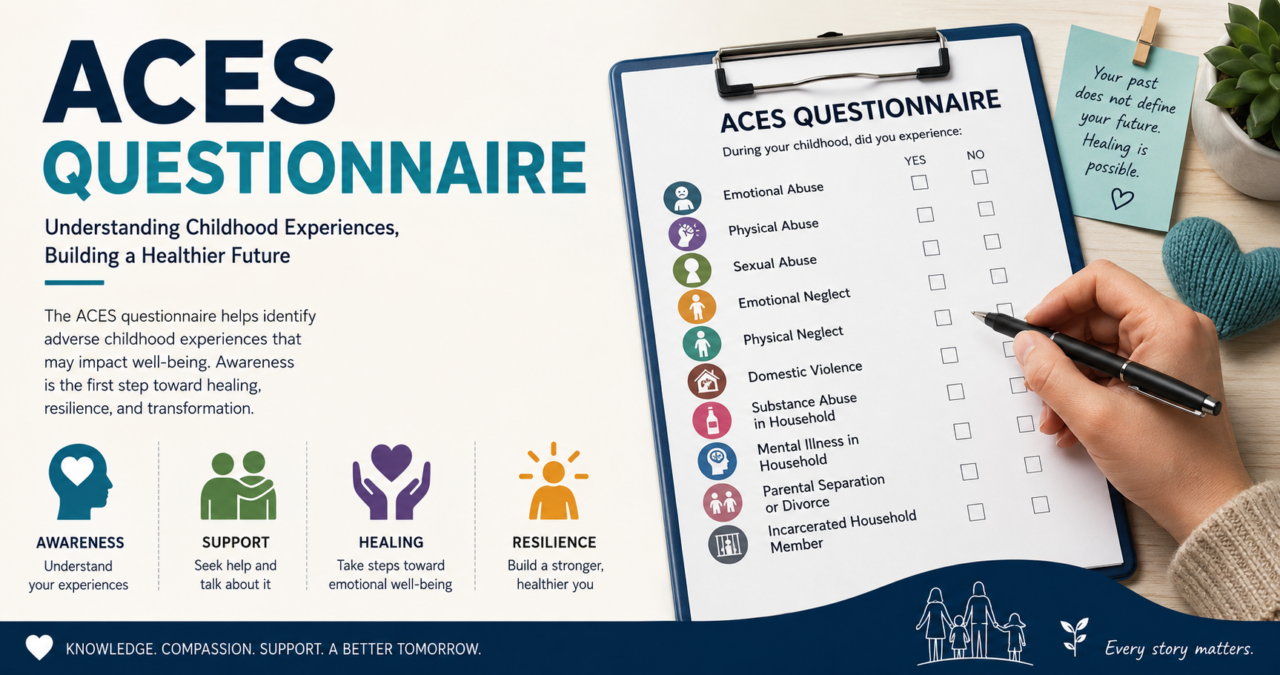

The aces questionnaire is a widely discussed tool for understanding how difficult or stressful experiences during childhood may influence a person’s health, behavior, relationships, and emotional well-being later in life. ACES stands for Adverse Childhood Experiences, a term used to describe potentially harmful experiences that can happen during the early years of life. These experiences can include different forms of abuse, neglect, household challenges, and other situations that may affect a child’s sense of safety and stability.
What makes the aces questionnaire interesting is that it is not designed to label someone or predict exactly what their future will look like. Instead, it provides a structured way to think about experiences that may otherwise be difficult to discuss. Childhood is a period when the brain, emotional system, and social skills are developing rapidly, so repeated stress can potentially influence how a person responds to challenges later in life.
It is important to understand that the aces questionnaire is a screening and educational tool rather than a complete psychological assessment. A score does not tell the entire story of a person. People respond differently to difficult experiences, and supportive relationships, safe environments, personal strengths, and access to appropriate resources can all influence outcomes.
What Is the ACES Questionnaire?
The aces questionnaire is a series of questions intended to identify certain stressful or potentially traumatic experiences that may have occurred during childhood. The concept originated from research examining connections between adverse childhood experiences and health outcomes later in life. The goal was to better understand whether difficult experiences during childhood could have long-term effects beyond the immediate situation.
Rather than asking about every possible childhood event, the traditional aces questionnaire focuses on broad categories of adversity. These can include experiences involving abuse, neglect, and household dysfunction. The questions are generally straightforward, but the subjects they address can be deeply personal.
The aces questionnaire is therefore more than a simple checklist. It can serve as a starting point for conversations about childhood experiences and their possible relationship to current well-being. However, completing it should never be treated as a substitute for speaking with a qualified professional when someone is experiencing emotional distress or other difficulties.
Why Was the ACES Questionnaire Developed?

The aces questionnaire developed from efforts to better understand the relationship between childhood adversity and adult health. Researchers noticed that difficult experiences in childhood were common and that they could be associated with a wide range of later-life challenges. This encouraged researchers and healthcare professionals to look more closely at the connection between early experiences and long-term well-being.
One important idea behind the aces questionnaire is that childhood experiences do not necessarily disappear simply because a person grows older. Stress experienced during formative years can sometimes influence emotional responses, coping patterns, relationships, and health behaviors. That does not mean that a difficult childhood automatically causes future problems. Instead, it highlights the importance of considering a person’s history when trying to understand their overall well-being.
The development of the aces questionnaire also helped encourage more trauma-informed approaches in healthcare, education, social services, and other settings. Understanding someone’s background can help professionals approach sensitive situations with greater empathy rather than making assumptions about behavior.
What Does the ACES Questionnaire Ask About?
The traditional aces questionnaire focuses on several broad areas of childhood adversity. These generally include experiences involving emotional abuse, physical abuse, sexual abuse, emotional neglect, physical neglect, and difficult household circumstances.
Household-related experiences can involve situations such as domestic violence, substance misuse in the household, serious mental health difficulties, separation or divorce, or having a household member experience incarceration. The exact wording can vary depending on the version of the questionnaire being used.
It is worth remembering that the traditional aces questionnaire does not cover every difficult experience a child might encounter. For example, bullying, community violence, discrimination, poverty, homelessness, serious illness, natural disasters, and other forms of adversity can also affect childhood development. Some modern approaches therefore consider a broader range of experiences than the original questionnaire.
How Does the ACES Questionnaire Work?
The aces questionnaire is generally completed by answering questions about whether certain experiences happened during childhood. The questions are usually designed to be easy to understand, allowing a person to reflect on their past without needing specialized knowledge.
The traditional approach involves counting certain categories of adverse experiences. However, the resulting score should be interpreted carefully. A score is not a diagnosis, and it does not measure the severity of every experience. Two people with the same score may have completely different childhoods and may respond to those experiences in very different ways.
This is one reason the aces questionnaire should be viewed as a conversation starter rather than a definitive measurement of someone’s life. Context matters. The timing of an experience, how long it lasted, the child’s relationship with supportive adults, and the resources available to the family can all influence its impact.
What Does an ACES Score Mean?
People often search for an aces questionnaire because they want to understand what their score means. This is where some caution is necessary. A higher score generally indicates exposure to more categories of adversity, but it does not automatically mean that someone will experience poor health, emotional difficulties, or relationship problems.
Likewise, a lower score does not guarantee that a person has never experienced trauma or significant stress. The traditional questionnaire only asks about particular categories of adversity. Someone may have experienced serious hardship that is not represented by the questions.
The aces questionnaire should therefore never be used as a way to rank people. A score is not a measure of personal strength, character, intelligence, or future potential. It simply provides limited information about certain experiences that may have occurred during childhood.
Why Childhood Experiences Matter
Childhood is a period of extraordinary development. During these years, children learn how to understand emotions, build relationships, respond to stress, communicate needs, and develop expectations about the world around them. Consistent safety and supportive relationships can provide a strong foundation for healthy development.
On the other hand, repeated or severe adversity can place considerable stress on a developing child. When a child frequently feels unsafe, the body’s stress response may become activated again and again. Over time, this may influence emotional regulation, attention, sleep, behavior, and other aspects of development.
This is one reason the aces questionnaire has become relevant in discussions about public health and preventive care. It encourages people to recognize that health is influenced by more than genetics or lifestyle. Social circumstances and early experiences can also matter.
The Connection Between ACES and Mental Well-Being
The aces questionnaire is often discussed in relation to mental and emotional well-being because childhood adversity may be associated with increased vulnerability to certain psychological difficulties. Experiences involving abuse, neglect, instability, or household dysfunction can sometimes affect how a person handles stress later in life.
Someone who grew up in an unpredictable environment may become highly alert to possible danger. Another person may have difficulty trusting others or expressing emotions. Someone else might respond to stress by withdrawing, becoming angry, or avoiding difficult situations. These reactions can develop for many different reasons, and they should not automatically be attributed to childhood adversity.
The aces questionnaire can help identify a possible area worth exploring, but it cannot explain an individual’s entire psychological experience. Professional assessment is much more appropriate when someone needs help understanding persistent emotional or behavioral concerns.
ACES and Physical Health
Research surrounding adverse childhood experiences has also explored relationships between childhood adversity and physical health. Chronic stress can affect multiple systems within the body, and long-term exposure to stressful conditions may contribute to unhealthy coping patterns or increased vulnerability to certain health problems.
This does not mean that completing an aces questionnaire can predict whether someone will develop a particular illness. Human health is much more complicated than a questionnaire score. Genetics, environment, nutrition, physical activity, healthcare access, sleep, social support, and many other factors all play important roles.
The value of the aces questionnaire is better understood as part of a broader conversation about prevention and holistic health. It reminds professionals that asking about a person’s life circumstances can sometimes be just as important as asking about physical symptoms.
ACES and Relationships
Childhood experiences can also influence the way people approach relationships. Children learn about trust, communication, boundaries, and emotional safety partly through their interactions with caregivers and other important adults.
A person who experienced unstable or harmful relationships during childhood may find certain relationship patterns challenging later in life. They might struggle with trust, fear abandonment, avoid emotional closeness, or have difficulty communicating their needs. However, these patterns are not inevitable.
The aces questionnaire can provide a useful starting point for reflecting on these connections. It should never be used to conclude that someone is incapable of having healthy relationships. People can learn new skills, develop supportive connections, and change long-standing patterns throughout life.
Can a High ACES Score Be Changed?
An aces questionnaire score reflects past experiences, so the events themselves cannot be changed. However, a person’s future is not determined by that score. This distinction is extremely important.
People can build resilience through supportive relationships, healthy coping strategies, education, meaningful work, community connections, therapy, and other positive experiences. A safe and supportive environment can make a substantial difference in how someone responds to stress.
In this sense, the aces questionnaire should not be viewed as a prediction of destiny. It is better understood as a snapshot of certain childhood experiences. What happens afterward can matter enormously.
The Importance of Resilience
Resilience is one of the most important concepts to understand alongside the aces questionnaire. Resilience does not mean that a person was unaffected by difficult experiences. Instead, it refers to the ability to adapt, recover, and continue developing despite adversity.
A child who has experienced hardship may still benefit greatly from a caring teacher, relative, friend, coach, counselor, or other trusted adult. Stable relationships can provide a sense of security that helps children cope with difficult circumstances.
This is why professionals should avoid focusing exclusively on adversity. The aces questionnaire identifies certain risks, but it does not measure every protective factor in someone’s life. Strengths and supportive experiences deserve equal attention.
Limitations of the ACES Questionnaire
Although the aces questionnaire can be useful, it has important limitations. The original questionnaire was not created to measure every type of childhood trauma or adversity. Modern understanding of trauma is broader and recognizes many experiences that may not appear on the traditional checklist.
Another limitation is that the questionnaire generally treats different categories of adversity as separate experiences without fully measuring their intensity, duration, timing, or context. A single event and years of repeated exposure may therefore receive similar treatment within a simple scoring system.
The aces questionnaire also relies on personal recollection. Memories can change over time, and people may remember childhood events differently depending on their age, circumstances, and current emotional state. For these reasons, the questionnaire should be used thoughtfully and never treated as an infallible record of someone’s past.
Should Everyone Take the ACES Questionnaire?
There is no universal requirement for everyone to complete an aces questionnaire. Whether it is useful depends on the person’s purpose and circumstances. Some people use it for education and self-reflection, while professionals may use related screening approaches as part of broader conversations about social and emotional well-being.
For someone who knows that childhood experiences are emotionally difficult to discuss, completing the questionnaire without support may bring up uncomfortable memories. It is perfectly reasonable to stop, take a break, or speak with a trusted professional if the process becomes overwhelming.
The aces questionnaire should always be approached with compassion. The purpose is not to force someone to revisit painful experiences but to create opportunities for understanding and appropriate support.
ACES Questionnaire and Trauma-Informed Care
The ideas behind the aces questionnaire have contributed to the growth of trauma-informed care. This approach encourages professionals to consider whether past adversity may influence how a person experiences healthcare, education, social services, or other environments.
Trauma-informed care does not mean assuming that every person has experienced trauma. Instead, it means creating environments that emphasize safety, respect, choice, collaboration, and trust.
Using information from an aces questionnaire responsibly means avoiding judgment. A person’s childhood history should not become a reason to stereotype them or reduce them to their past. The information should instead help professionals provide more compassionate and appropriate support.
ACES Questionnaire for Parents and Families
Parents may encounter the aces questionnaire while researching child development, family health, or emotional well-being. It can encourage parents to think about the importance of creating stable, supportive environments for children.
Children do not need perfect parents or completely stress-free lives. Every family experiences disagreements, financial pressure, transitions, and difficult moments. What matters is how adults respond, repair relationships, provide reassurance, and create opportunities for children to feel safe and supported.
The aces questionnaire can therefore be useful as an educational resource, but parents should not use it to blame themselves or others. Its purpose is better served by encouraging awareness, prevention, communication, and access to support.
ACES Questionnaire in Schools and Communities
Schools and community organizations have also become increasingly interested in childhood adversity and resilience. Teachers and other professionals often work with children whose behavior may reflect challenges that are not immediately visible.
Understanding the principles behind the aces questionnaire can encourage educators to look beyond behavior alone. A child who seems withdrawn, distracted, aggressive, or unusually anxious may be dealing with circumstances outside the classroom.
However, educators should not attempt to diagnose trauma based on a questionnaire score. Their role is better focused on creating supportive environments, recognizing potential concerns, communicating appropriately with families, and connecting students with qualified professionals when necessary.
How to Approach the ACES Questionnaire Responsibly
Anyone considering an aces questionnaire should remember that the goal is understanding, not self-judgment. There is no score that makes someone better or worse than another person. Childhood adversity is something a person experienced, not something that defines their identity.
It is also helpful to consider the larger context. Supportive relationships, personal strengths, positive experiences, cultural and community resources, and access to professional care can all influence how someone moves forward.
If completing an aces questionnaire brings up intense emotions, it may be helpful to pause rather than forcing yourself to continue. Talking with a qualified mental health professional or another trusted support person can provide a safer environment for processing difficult memories.
Conclusion
The aces questionnaire is a useful tool for understanding how certain childhood experiences may be connected with emotional, social, and physical well-being later in life. It can encourage meaningful conversations about childhood adversity and help people recognize that early experiences may influence the way they respond to stress, relationships, and challenges.
However, an aces questionnaire score should never be treated as a diagnosis or a prediction of someone’s future. Every person’s story is different, and resilience, supportive relationships, healthy environments, and access to appropriate support can make a meaningful difference. The most valuable way to use the aces questionnaire is as a starting point for awareness, reflection, and compassionate support rather than as a label.
Frequently Asked Questions About the ACES Questionnaire
Is the ACES Questionnaire a Diagnostic Test?
No. The aces questionnaire is not a diagnostic test. It is primarily a screening, educational, and reflective tool designed to identify exposure to certain categories of childhood adversity.
A healthcare or mental health professional would need to conduct a broader assessment to understand someone’s current symptoms, circumstances, and needs.
Does a High ACES Score Mean Someone Will Have Health Problems?
No. A high aces questionnaire score does not guarantee future physical or mental health problems. Research has identified associations between childhood adversity and various outcomes, but individual experiences differ greatly.
Protective factors and positive experiences can influence resilience and long-term well-being.
Can the ACES Questionnaire Measure Every Type of Trauma?
No. The traditional aces questionnaire covers specific categories of adversity and does not represent every possible childhood challenge. Experiences such as bullying, community violence, poverty, discrimination, serious illness, and other stressful circumstances may not be fully represented.
This limitation is important when interpreting the results.
Is It Safe to Take the ACES Questionnaire Alone?
For many people, answering the questions may be straightforward. However, the aces questionnaire can involve sensitive subjects that may bring up difficult memories.
If someone expects the questions to be emotionally challenging, completing them with appropriate professional support may be more comfortable.
What Should Someone Do After Completing the ACES Questionnaire?
The next step depends on why the person completed the aces questionnaire. Someone who simply wanted to learn more may use the result as an opportunity for reflection. Someone experiencing emotional or behavioral difficulties may benefit from discussing their concerns with a qualified professional.
The most important point is that the result should be treated as information, not as a permanent label.
Final Thoughts on the ACES Questionnaire
The aces questionnaire has become an important tool in conversations about childhood adversity, health, resilience, and trauma-informed care. Its biggest contribution may be encouraging people to recognize that early experiences can be relevant to well-being without assuming that childhood determines adulthood.
At the same time, the aces questionnaire should be used carefully. A score cannot capture the complexity of someone’s childhood, personality, relationships, strengths, or future. It cannot measure every form of adversity, and it cannot predict an individual’s destiny.
Ultimately, the value of the aces questionnaire comes from using it as a starting point for understanding rather than a final judgment. Childhood experiences matter, but so do the supportive relationships, opportunities, coping skills, and positive experiences that come afterward. A difficult beginning does not have to define the rest of a person’s story.
YOU MAY READ ALSO