
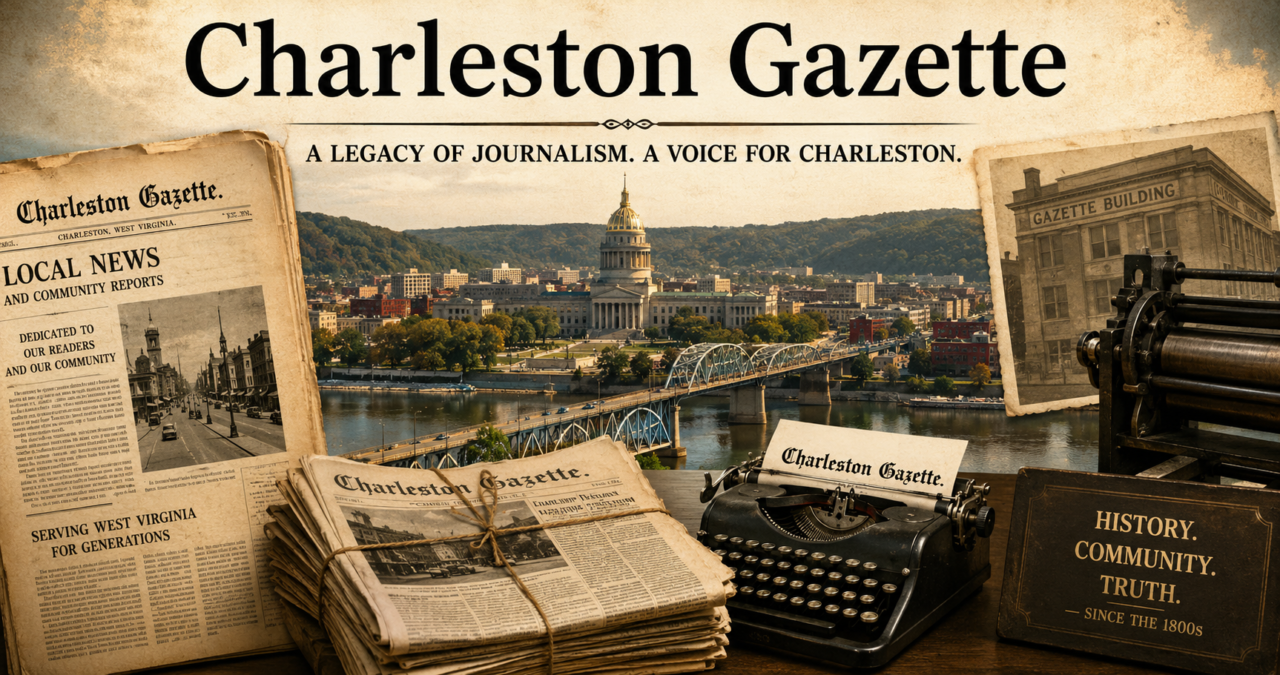

The Charleston Gazette is a name closely connected with the history of journalism in Charleston, West Virginia. For generations, the publication served as an important source of local reporting, political discussion, community stories, and public affairs. Although the original newspaper no longer publishes under the Charleston.Gazette name, its influence remains part of the state’s broader newspaper tradition.
Understanding the Charleston Gazette means looking beyond a newspaper title. It means exploring how a local publication developed alongside its community, adapted to changing technology, competed with another major Charleston newspaper, and eventually became part of the Charleston.Gazette-Mail. The story is a useful example of how regional newspapers have changed as the media industry itself has evolved.
The Early Story Behind Charleston Gazette
The roots of the Charleston Gazette reach back to the nineteenth century. The newspaper’s history began with the Kanawha Chronicle, a weekly publication started in Charleston. Over time, the publication changed its name and developed into a more established daily newspaper serving the growing community around Charleston and Kanawha County.
The newspaper eventually became known as the Daily Gazette before the name Charleston.Gazette was formally adopted in the early twentieth century. This transition reflected more than a simple branding decision. Charleston itself was becoming increasingly important as West Virginia’s political and commercial center, creating a larger audience for dependable local journalism.
The development of the Charleston.Gazette also illustrates how newspapers traditionally grew with their communities. Local readers wanted information about government, business, education, transportation, industry, courts, and everyday life. A newspaper that could consistently cover those subjects naturally became part of the community’s routine.
Charleston Gazette and Its Identity

One of the most interesting aspects of the Charleston Gazette was its editorial identity. The newspaper developed a reputation for progressive and liberal editorial positions, a characteristic that became part of how readers understood the publication. The West Virginia Encyclopedia describes the paper’s roots as having an editorial outlook that was Democratic, liberal, and progressive.
That identity did not mean every story was simply political commentary. Like other major newspapers, the Charleston Gazette had to balance reporting, opinion, community coverage, and advertising. Its editorial pages provided a place for arguments and perspectives, while its news operation focused on reporting events that mattered to readers.
This distinction between news reporting and editorial opinion is important when looking at the newspaper historically. A newspaper can have a recognizable editorial personality while still operating a newsroom responsible for reporting facts and covering the community. The Charleston.Gazette became particularly recognizable because its editorial voice was an important part of its public identity.
The Chilton Family and Charleston Gazette
The history of the Charleston Gazette is strongly associated with the Chilton family. The family became connected with the newspaper in the early twentieth century, and ownership remained associated with the Chiltons for more than a century.
William E. Chilton, who also served as a United States senator, became publisher after returning to Charleston. His involvement helped shape the newspaper during a period when local newspapers were becoming increasingly influential in political and civic life. The Chilton connection continued through later generations, creating an unusually long relationship between one family and one newspaper.
Family ownership gave the Charleston.Gazette a distinctive sense of continuity. Newspaper ownership can influence long-term editorial culture, investment decisions, and relationships with a local community. In the case of the Charleston publication, generations of leadership helped preserve its identity even as the newspaper business changed dramatically.
A Newspaper Connected to Charleston’s Community
A successful local newspaper has to do more than report major political events. It needs to understand the community it serves. The Charleston Gazette became important partly because its coverage extended into many areas of West Virginia life.
Readers could turn to the newspaper for state government news, local developments, education stories, business coverage, environmental issues, health matters, sports, cultural events, and community information. This wide range made the publication relevant to people with very different interests.
The role of the Charleston.Gazette was therefore closely tied to Charleston itself. The newspaper was not simply observing the city from a distance. It was reporting on institutions, people, controversies, achievements, and challenges that directly affected its readership.
Charleston Gazette and Investigative Journalism
The reputation of the Charleston Gazette was also strengthened by serious reporting. The newspaper received national recognition for journalism, particularly in areas such as education, health care, and environmental issues.
That kind of reporting demonstrates why regional newspapers can matter far beyond their immediate circulation area. Local journalists often have access to public records, community sources, local institutions, and long-term knowledge that national media organizations may not possess. A strong local newsroom can therefore investigate issues that might otherwise receive limited attention.
For the Charleston.Gazette, journalism was connected to public accountability. Reporting on government decisions, environmental concerns, education systems, and health issues gave readers information they could use to understand debates taking place around them.
The Relationship With Charleston Daily Mail
The story of the Charleston Gazette cannot really be understood without discussing the Charleston Daily Mail. The two newspapers were competitors, but they also developed an unusual business relationship.
In the late twentieth century, the newspapers operated under a joint operating agreement. Their business, advertising, circulation, and production operations were combined, while their news and editorial identities remained separate. This arrangement allowed both publications to continue maintaining distinct editorial voices while sharing parts of the costly newspaper infrastructure.
The relationship was unusual because readers could experience two competing editorial perspectives while the companies cooperated on practical parts of newspaper production. The arrangement continued for decades and became an important chapter in Charleston’s newspaper history.
Charleston Gazette During the Newspaper Industry’s Transformation
The newspaper industry changed substantially as television, radio, the internet, and digital publishing became more important. The Charleston.Gazette faced the same broad pressures experienced by newspapers across the United States.
Traditional newspapers depended heavily on print advertising and subscriptions. As audiences increasingly moved online, those traditional revenue sources became more difficult to maintain. At the same time, readers began expecting news to be available quickly through computers and mobile devices.
The Charleston.Gazette therefore existed during a transition between two very different media environments. Its earlier years were defined by printed editions, physical distribution, and daily reading habits. Later years required newspapers to think about websites, digital audiences, online advertising, and rapidly changing reader expectations.
Why Local Newspapers Still Matter
The story of the Charleston Gazette offers a useful reminder of why local journalism matters. National news organizations can report on major events, but local newspapers often provide the detailed community coverage that larger organizations cannot easily replicate.
A local newsroom can follow city government meetings, school decisions, regional businesses, courts, community organizations, and local political debates. Journalists who remain in one area for years can develop relationships and historical knowledge that improve their ability to explain complicated stories.
The Charleston.Gazette became part of that tradition. Its historical significance comes not only from the stories it published but also from the role it played in connecting readers with the institutions and people around them.
Charleston Gazette and the Importance of Archives
Even though the original Charleston Gazette ceased publication under that name, its historical material remains valuable. The Library of Congress catalogs the Charleston.Gazette as a newspaper published from the early twentieth century through the middle of the twenty-first-century period, with the title ending in the merger that created the Charleston.Gazette-Mail.
Newspaper archives can be incredibly useful for researchers, historians, journalists, students, and families. Old newspaper pages can reveal how communities responded to elections, disasters, economic changes, cultural events, new laws, and important public debates.
The Charleston.Gazette archives can therefore be viewed as a historical record of West Virginia life. A newspaper captures the concerns of its own time, including what editors considered important and what readers were discussing. That makes old editions useful not only for journalism research but also for understanding social history.
Finding Historical Charleston Gazette Issues
People interested in the Charleston Gazette can explore newspaper collections and archival resources. The West Virginia and Regional History Center maintains microfilm information for Charleston newspapers, including extensive holdings for the Charleston.Gazette and related publications.
Digital newspaper databases also provide opportunities to search historical editions. Such collections can be particularly useful when researching family names, local businesses, political events, historical neighborhoods, or major community stories.
For genealogists, the Charleston.Gazette can be especially interesting. Newspapers frequently contain birth announcements, wedding notices, obituaries, community events, legal notices, professional advertisements, and other small details that may not appear in official records.
The Transition to Charleston Gazette-Mail
A major turning point arrived when the Charleston Gazette and Charleston Daily Mail merged their news operations and became the Charleston Gazette-Mail. The new publication began in July of the relevant merger year, bringing the two historic Charleston newspaper traditions together under one name.
The merger represented a significant change in the local newspaper landscape. For decades, readers had been familiar with the two publications and their contrasting editorial perspectives. Bringing them together reflected the financial and operational pressures facing newspapers as the industry moved further into the digital age.
The creation of the Charleston Gazette-Mail did not erase the history of the Charleston Gazette. Instead, it became another chapter in that history. The older newspaper’s reporting traditions, archives, staff experience, and community connections became part of a new publishing structure.
What Made Charleston Gazette Memorable
There are several reasons the Charleston Gazette continues to attract interest from readers and researchers. Its longevity is one obvious factor. Few local newspapers maintain such a long and recognizable presence within one community.
Its editorial identity is another reason. The paper became known for a distinct point of view, especially on its editorial pages. That made it part of West Virginia’s broader political and cultural conversation.
Its journalism is equally important. Recognition for reporting in areas such as education, health care, and environmental issues helped establish the newspaper as a serious regional news organization.
Perhaps most importantly, the Charleston Gazette documented everyday life. Major historical events are easy to remember, but ordinary local stories often disappear unless someone records them. Newspapers preserve those details.
Charleston Gazette in the Digital Era
The changing media environment also altered how people interacted with newspapers. Readers who once waited for a printed edition could eventually access news through websites, computers, and mobile devices.
For the Charleston Gazette, this transition was part of a much larger transformation affecting newspapers throughout the country. Digital publishing offered opportunities to reach readers instantly, but it also challenged the traditional financial model that had supported large print newsrooms.
Today, people often consume news through social media, search engines, newsletters, podcasts, video platforms, and mobile applications. That makes the historical development of the Charleston Gazette particularly interesting because it shows how a traditional newspaper existed before and during the early stages of this broader digital transformation.
The Historical Value of Charleston Gazette
The historical value of the Charleston Gazette goes beyond its role as a news business. Newspapers can function as informal archives of public life. They reveal what people knew, what they debated, what worried them, and what they celebrated.
Researchers can use the Charleston Gazette to examine changes in West Virginia politics, economic development, environmental debates, education, healthcare, and culture. Historians can compare coverage from different periods to see how public attitudes changed.
The newspaper can also provide a window into the development of Charleston. Streets, businesses, institutions, neighborhoods, and community organizations change over time. Old newspaper coverage can help reconstruct those changes and provide context that photographs or official documents alone may not provide.
Lessons From Charleston Gazette for Modern Journalism
The history of the Charleston Gazette offers several lessons for modern journalism. One is that local knowledge has enduring value. Communities still need journalists who understand local institutions and can explain complicated issues in accessible language.
Another lesson is that editorial identity matters. Readers often develop relationships with publications because they recognize a consistent voice and understand what a publication stands for. At the same time, credibility depends on responsible reporting and a clear distinction between factual journalism and opinion.
The Charleston Gazette also demonstrates the importance of adaptation. Newspapers have never been static businesses. They have changed formats, ownership structures, distribution methods, technology, and publishing schedules throughout their history.
Why People Still Search for Charleston Gazette
People search for Charleston Gazette today for many different reasons. Some are interested in West Virginia history. Others may be researching relatives, looking for old newspaper stories, studying journalism, or exploring the development of Charleston.
For researchers, the name can also lead to related publications and the later Charleston Gazette-Mail. Understanding the historical connection between these publications makes archival research much easier.
The continued interest in the Charleston Gazette shows that a newspaper’s influence can survive even after its original publication title disappears. Once newspapers become part of a community’s history, their pages become valuable records for future generations.
Final Thoughts on Charleston Gazette
The Charleston Gazette represents much more than an old newspaper title. It represents a long tradition of regional journalism in West Virginia, a strong relationship between a publication and its community, and an evolving media industry.
From its nineteenth-century roots and its development under the Chilton family to its decades-long relationship with the Charleston Daily Mail and eventual transition into the Charleston Gazette-Mail, the publication experienced many of the same challenges and changes that shaped American journalism.
What makes the Charleston Gazette especially interesting is the combination of history, journalism, community identity, and archival value. Its pages documented not only major political and social developments but also the ordinary details that make local history meaningful.
For anyone exploring West Virginia’s past, the Charleston Gazette remains a valuable name to know. Its legacy continues through archived editions, historical research, and the broader tradition of local journalism that it helped establish in Charleston.
Conclusion
The Charleston Gazette holds an important place in the history of West Virginia journalism. Its long connection with Charleston allowed it to document political developments, community events, social changes, and issues that mattered to local readers. More than a newspaper, it became part of the community’s historical record.
Although the Charleston Gazette is no longer published under its original name, its legacy continues through archived editions and the Charleston Gazette-Mail. For historians, researchers, families, and anyone interested in West Virginia’s past, the newspaper remains a valuable source of information. Its story also highlights the lasting importance of local journalism and the role newspapers play in preserving the memories and voices of a community.
FAQs About Charleston Gazette
What was the Charleston Gazette?
The Charleston Gazette was a major newspaper based in Charleston, West Virginia. Its roots trace back to the nineteenth century, and it became one of the state’s important regional newspapers.
When did Charleston Gazette become part of Charleston Gazette-Mail?
The Charleston Gazette became part of the Charleston Gazette-Mail when the Gazette and Charleston Daily Mail combined their news operations in July of the merger year.
Is Charleston Gazette still published under its original name?
No. The original Charleston Gazette title was replaced by the Charleston Gazette-Mail following the merger with the Charleston Daily Mail.
Where can people find old Charleston Gazette issues?
Historical Charleston Gazette issues can be found through archival collections, including resources maintained by the Library of Congress and West Virginia historical institutions.
Why is Charleston Gazette important to West Virginia history?
The Charleston Gazette documented decades of political, social, economic, environmental, educational, and community developments in West Virginia. Its archives provide valuable material for understanding the state’s past.
YOU MAY READ ALSO